A practical weighbridge software comparison for steel, cement, mining, power and port operations.
For any operation that runs on bulk material, coal, clinker, iron ore, scrap, or aggregates, the weighbridge is the cash register. Every truck that rolls across it either protects your margin or quietly leaks it. So when teams evaluate weighbridge automation India-wide, the debate almost always comes down to two philosophies: an RFID-and-AI-camera setup that verifies the vehicle, the driver, and the platform independently versus a positioning-sensor-led setup that simply registers whether something is in range. This is the weighbridge software comparison that decides how much of your tonnage you actually keep.
One technical point worth clearing up first, because marketing in this space blurs it constantly: nothing in either approach actually weighs the truck. The weight always comes from load cells under the platform. What the two approaches really differ on is the automation and verification layer, how the vehicle is identified, how the system confirms it's correctly positioned, how malpractice is caught, and how clean the audit trail is. That's where the money is won or lost, and where effective weighbridge fraud prevention either happens or doesn't.
Once you look closely at what each approach can actually verify, not just detect, the gap stops being a matter of preference. RFID combined with AI vision closes fraud and safety holes that photoelectric, infrared, and ultrasonic positioning sensors cannot, by design, ever close.
What "Weighbridge Automation" Actually Means

Strip away the jargon, and understanding how an unmanned weighbridge works comes down to four jobs the system automates on top of the weighing itself:
- Identification — knowing which vehicle is on the platform, and who is driving it, without a guard manually logging it.
- Positioning and presence — confirming the truck is fully on the deck, stationary, and that the platform is clear of anything that shouldn't be there before a reading is captured.
- Integrity — catching the tricks drivers and operators use to skim weight or fake a transaction.
- Data and integration — pushing a clean, time-stamped, tamper-proof record into your ERP without manual re-entry.
A true unmanned weighbridge system India operators can rely on has to nail all four — ideally with no human in the cabin or on the platform at all. RFID-plus-AI and positioning-sensor-led setups use fundamentally different tools to get there, and the difference isn't cosmetic.
The Positioning-Sensor Approach: What It Can't See

Positioning-sensor-led weighbridge automation leans on infrared or photoelectric beams, and sometimes ultrasonic sensors, to confirm a vehicle is on the deck, paired with boom barriers and traffic lights to choreograph flow. It's mature, low-compute technology, and on paper, it sounds deterministic: a beam is broken, a barrier lifts.
In practice, that mechanic has a blind spot that's well understood in the industry, and increasingly well exploited.
Beam and sensor spoofing. Photoelectric and infrared positioning sensors only register one thing: something interrupted the beam. That "something" can be manually faked, a hand, a rod, a foreign object held across the sensor path to force a false "vehicle present" signal, or to stall the system into accepting a reading it shouldn't.
Ultrasonic sensors used for the same positioning check carry the identical weakness: they detect an object in range, not whether that object is a correctly positioned 16-tonne truck or a deliberate interference. For a plant serious about weighbridge fraud prevention, that's a structural hole, not a tuning issue.
No human detection. Photoelectric beams and IR sensors can tell you the platform isn't empty. They cannot tell you why. A person standing on the weighing platform during capture, whether deliberately to manipulate the reading or accidentally, because no one stopped them, will alter the recorded weight by roughly 80–100 kg, enough to matter at scale across thousands of transactions a day.
A beam sensor sees an obstruction. It doesn't see a person, can't distinguish a person from cargo overhang or debris, and has no way to flag it before the reading locks in. The same blindness applies at the safety end: sensor logic has no way to confirm a driver has actually exited the cabin before the vehicle proceeds, which matters as much for site safety protocol as it does for weighment accuracy.
No identity layer at all. Positioning sensors don't identify anything they're not designed to. Vehicle and driver identification have to come from elsewhere in the stack, which is exactly where RFID and AI vision earn their place. A system built around positioning sensors alone, without that identity layer, can confirm "something is on the deck" and nothing more, not which vehicle, and certainly not which driver.
None of this means positioning sensors are badly engineered. It means they were built to answer "is an object here," and a weighbridge's real fraud and safety problems live one level deeper, in questions about which vehicle, which driver, and whether the platform is genuinely clear, which positioning sensors structurally cannot ask.
The RFID + AI Vision Approach: Verifying People, Not Just Objects
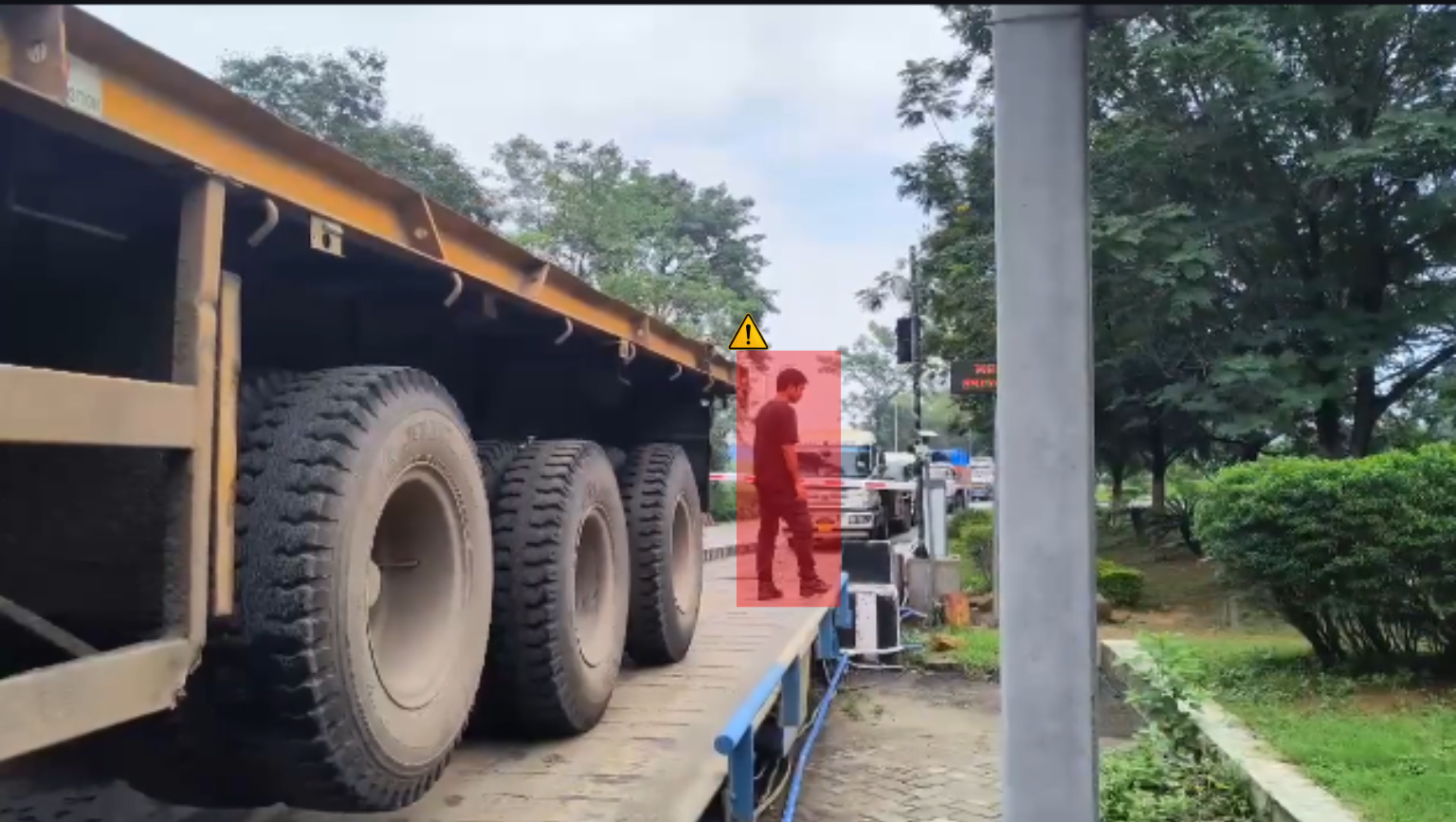
An RFID-and-AI-camera system splits the work to match each technology's strength: RFID gives fast, weatherproof vehicle identification; AI weighbridge software handles positioning, platform integrity, and critically, driver identity. Together, they verify things a positioning-sensor stack never could.
ANPR and AI vision confirm full, stationary placement on the deck and, unlike a beam sensor, can distinguish a correctly positioned vehicle from an obstruction, an overhang, or a person on the platform, because the system is interpreting an image, not registering an interruption. Every transaction is backed by recorded footage, so disputes are settled with evidence instead of argument.
The capability that matters most, though, is identity. Camera-based verification puts a face to every transaction, on top of the vehicle ID RFID already provides. That combination closes every structural gap a positioning-sensor-only stack carries:
Beam-spoofing has nothing to spoof. Positioning is read from continuous video analysis, not a beam or an ultrasonic field. The failure mode that lets someone manually trigger a false "present" signal on a positioning-sensor system simply doesn't exist when positioning is verified by vision.
Dual authentication becomes real, not nominal. RFID verifies the vehicle. Camera-based driver identity verification confirms the person. Two genuinely different factors, checked independently, the correct truck and the correct, authorised human are both confirmed present, which a positioning-sensor system, having no identity layer at all, simply cannot do.
Human-on-platform detection closes the safety and accuracy gap at once. A vision system can detect a person on the weighing platform and hold the reading, protecting against the 80–100 kg swing that a single person on the deck introduces. The same camera coverage confirms the driver has safely exited the cabin before the transaction proceeds. One capability, two problems solved, neither of which a positioning-sensor stack can touch.
Where Helious Goes Further: Identity, Not Just Image
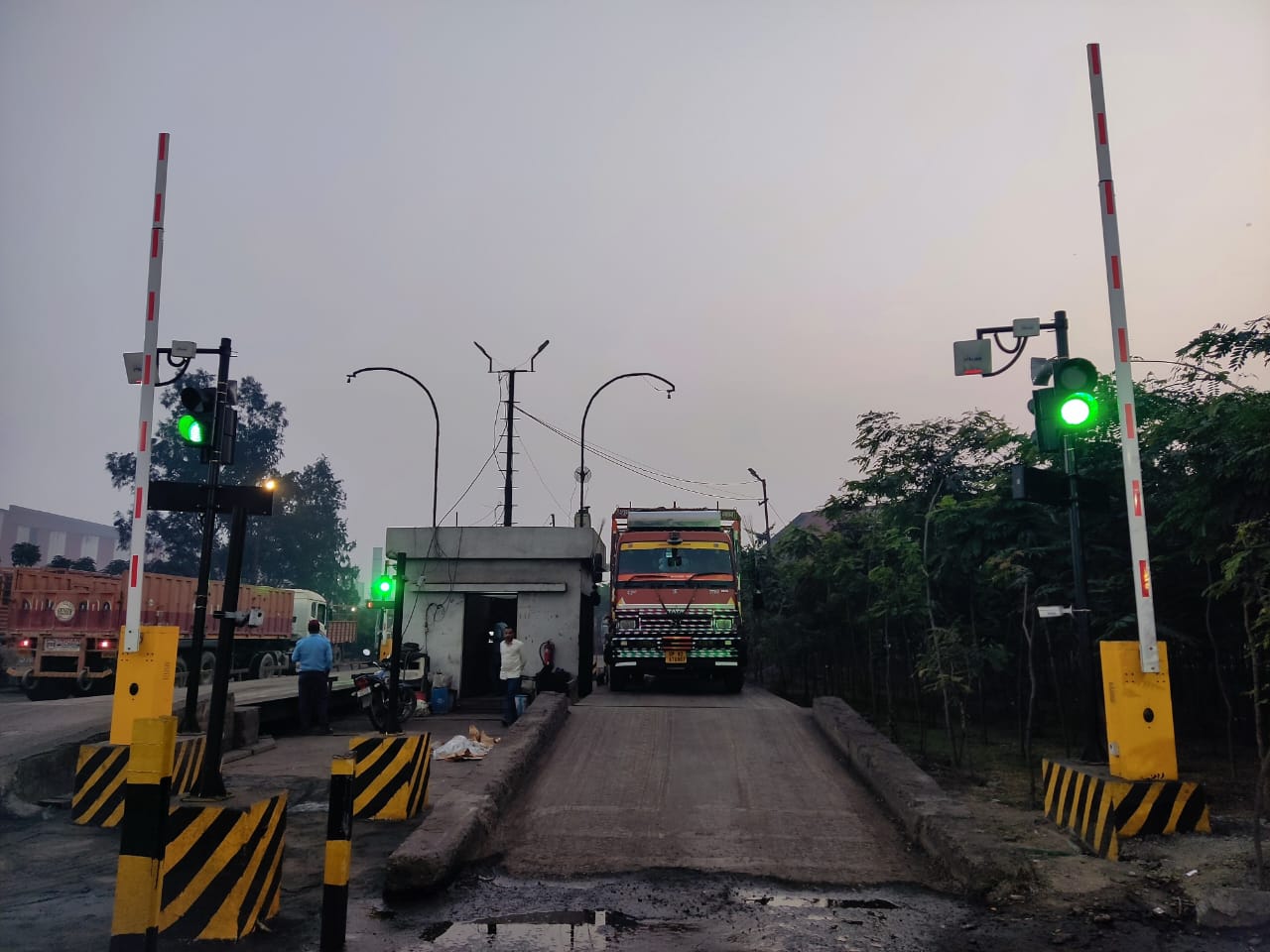
Most RFID-plus-camera pitches stop at "we can identify the truck." Identity verification, confirming the person, not just matching a face to a frame, is the part that actually closes the fraud loop, and it's where Helious Tech Solutions and its AI-Unmanned Weighbridge Automation System are built differently. As a leading weighbridge automation company in India, AI-native, DPIIT-recognised, and a Forbes India DGEMS 2025 Select 200 listee, Helious verifies people, not just images.
DigiLocker-based driver authentication. Helious has built an in-house feature that verifies driver identity against DigiLocker, India's government-backed digital identity system. This isn't face-matching against a photo on file; it's authentication against a government-issued digital record, which is a materially harder credential to fake or substitute than a printed licence a guard glances at. It's the dual-authentication argument made concrete: RFID identifies the vehicle, and the driver is independently, verifiably authenticated.
Zero-weight validation before every transaction. The platform automatically confirms the bridge reads true zero before the next truck enters. A sticky load cell or residual reading can quietly skew tonnage by tonnes a day across high-volume sites. This check kills that leak at the source, every single cycle.
Top-view material identification camera. A top-mounted camera captures the load itself, not just the truck, giving you material verification against the consignment record and a documented visual baseline if pilferage is suspected later. Positioning-sensor-led systems have no equivalent; there's nothing in that stack that looks at what's actually in the truck bed.
Seamless ERP integration. Every transaction syncs directly into SAP, Oracle, or whichever ERP runs the plant, with a VAPT-certified dashboard, meaning the data layer has been independently penetration-tested, not just claimed to be secure.
Proven at scale. The platform processes 10,000-plus transactions daily across live deployments, running with zero manpower at the weighbridge, automated loading intimations, and real-time anomaly escalation in production, not in a pilot.
What to Evaluate Before You Commit
Whichever direction you're leaning, four questions separate a system that pays for itself from one that becomes shelf-ware:
What's your vehicle mix? If a meaningful share of traffic is unknown third-party trucks rather than a fully captive fleet, the ANPR-backed vision becomes essential alongside RFID. RFID alone can't identify a vehicle with no tag.
What's the actual fraud you're trying to stop? If the honest answer includes platform tampering, driver substitution, or positioning spoofing, ask any positioning-sensor-led vendor directly how their system would have caught it. In most cases, the honest answer is: it wouldn't have, because positioning sensors weren't built to ask that question.
What's the five-year total cost, including the failure modes? Factor in not just sensor maintenance and calibration, but the cost of a single successful spoofing incident, a driver-substitution liability issue, or a disputed weighment with no footage to settle it. Those costs don't show up in a hardware quote, but they show up on a P&L.
How deep is the audit trail? A weighbridge that can't push tamper-proof, identity-verified data into your ERP in real time hasn't been automated; it's been instrumented. Ask specifically what evidence exists when a transaction is disputed, and whether that evidence includes who was driving, not just which vehicle was present.
Before you go further down this evaluation, it's worth putting a number against your own site. Helious's TAT Guard ROI Calculator works like a truck turnaround time system benchmark it takes your current vehicle volume, manpower cost, and turnaround time and shows what positioning-sensor blind spots and manual identification are actually costing you each month, no call required to see it.
Conclusion
Positioning-sensor-led weighbridge automation was built to answer a narrow question is an object present and in range, and it answers that question reliably. But the fraud and safety problems that actually cost plants money live one level deeper: which vehicle, which driver, and whether the platform is clear of anything that shouldn't be there. Positioning sensors can't ask those questions. RFID combined with AI vision can, and identity-verified systems like Helious answer them on every single transaction, automatically, which is what real weighbridge fraud prevention looks like in production.
Whether your priority is weighbridge automation steel plant throughput, weighbridge automation cement plant dispatch, or high-volume mining, power and port operations, the same logic holds: verify people, not just objects. If you're evaluating weighbridge automation for your plant, whether retrofitting a single bridge or rolling out across multiple sites, talk to Helious Tech Solutions, a leading best weighbridge automation company in India, for a walkthrough of the AI-Unmanned Weighbridge Automation System built around your operation. Contact us to scope a site assessment, or run the numbers yourself first with the TAT Guard ROI Calculator.
Frequently Asked Questions
1. What's the difference between RFID-plus-AI and positioning-sensor-led weighbridge automation? RFID-plus-AI splits identification and verification across two purpose-built layers: RFID handles fast, weatherproof vehicle identification, while AI vision handles positioning, platform integrity, and driver identity. Positioning-sensor-led systems rely on infrared, photoelectric, or ultrasonic beams to confirm an object is on the deck but have no identity layer at all, and can't distinguish a correctly positioned vehicle from an obstruction or a person. In any honest weighbridge software comparison, that identity gap is the deciding factor.
2. Can positioning sensors be defeated or spoofed? Yes, and this is a known weakness in positioning-sensor-led deployments. Photoelectric and IR positioning sensors can be triggered by manually interrupting the beam with a hand, a rod, or any object held across the sensor path, which can force a false "vehicle present" signal. Ultrasonic sensors used for the same check carry the identical vulnerability: they detect an object in range, not whether that object is a legitimately positioned vehicle or deliberate interference.
3. What does "dual authentication" mean at a weighbridge, and why don't positioning sensors provide it? Real dual authentication means independently verifying two different things: the vehicle and the driver. RFID verifies the vehicle. Camera-based driver identity verification, such as Helious's DigiLocker-based authentication, independently verifies the person. Positioning sensors verify neither; they only confirm an object is present, which is why a positioning-sensor-only stack has no identity layer to build dual authentication on top of.
4. How does a person on the weighing platform affect accuracy, and can positioning sensors catch it? A person standing on the platform during capture can shift the recorded weight by roughly 80–100 kg, which is meaningful at the scale of thousands of daily transactions. Photoelectric and IR beam sensors can detect that the platform isn't empty, but cannot distinguish a person from cargo overhang or debris, and have no way to flag the specific risk before a reading locks in. Vision-based systems can identify a person on the platform directly and hold the transaction.
5. How fast is the Helious AI-Unmanned Weighbridge per transaction? Each transaction completes in about 45 seconds: end-to-end weight capture, driver verification, material photo, digital slip generation, and ERP sync. For high-throughput sites, that's a significant reduction versus a manned bridge, and it doubles as a built-in truck turnaround time system.
6. Which industries benefit most from RFID-and-AI-vision weighbridge automation? Steel plants, cement, mining, thermal power, and ports anywhere with high vehicle volumes and bulk material movement, whether the fleet is fully captive or includes third-party trucks. Weighbridge automation steel plant and weighbridge automation cement plant deployments see the fastest returns because of sheer volume, and Helious deployments span all five sectors.